Steam Machine Four Months In: Is Valve's $1,049 Cube Worth It?
By AS Gaming EditorialNovember 14, 20265 min readPC
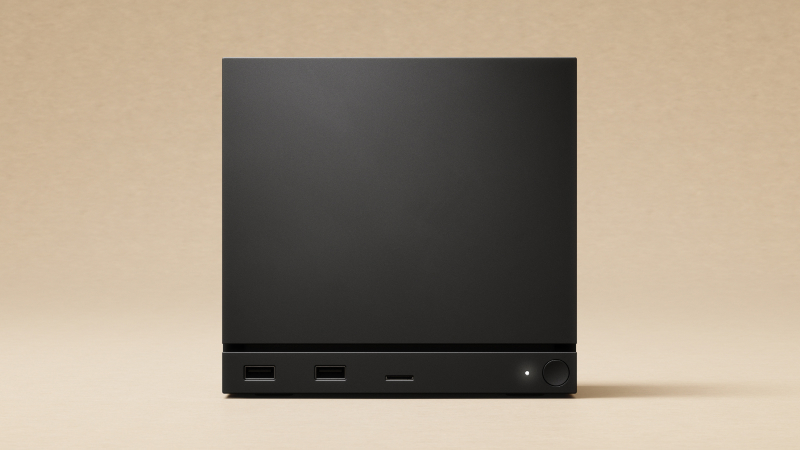
Source: Valve (official product image via Steam)
Four months after the first Steam Machines shipped, Valve's living-room PC is still one of the strangest products in gaming. It is a roughly six-inch cube that plays your entire Steam library on the TV, runs Linux, costs $1,049 before you buy a controller, and is still sold through a reservation queue. The question that hung over it at launch has not gone away: is the Steam Machine worth it?
The short answer is that it depends entirely on what you already own and what you want the box to do. This is not a console, and it is not a cheap PC. It is a very specific machine for a very specific kind of player, and four months of real-world use have made the edges of that niche much clearer.
The Price, Four Months Later
Valve announced the Steam Machine on November 12, 2025, opened reservations on June 22, 2026, and shipped the first units at the end of that month. The price has not moved since: $1,049 for the 512GB model and $1,349 for the 2TB model, with Steam Controller bundles at $1,128 and $1,428. Every model was still showing a waitlist as of this week, so new buyers join a queue rather than checking out directly.
Valve has been unusually open about why the machine costs what it does. The company said RAM and storage prices rose so fast during development that its original price goal was no longer viable, and that the hardware is sold at cost rather than subsidized the way consoles are. That honesty is refreshing, but it does not make $1,049 feel cheap, and it puts the Steam Machine in direct comparison with a DIY gaming PC at the same budget, where the same money buys more raw power and a lot more flexibility.
What Is Inside the Cube
The spec sheet has not changed since launch, and it is respectable rather than spectacular. A semi-custom AMD Zen 4 CPU with six cores and 12 threads runs up to 4.8GHz, paired with a semi-custom RDNA 3 GPU with 28 compute units. There is 16GB of DDR5 system memory plus 8GB of dedicated GDDR6 video memory, and a 512GB or 2TB NVMe SSD with a microSD slot for expansion.
Two details matter more than the raw numbers. First, the SSD and the memory are both user-upgradeable, which is rare for a box this small and gives the machine a longer useful life than a sealed console. Second, Valve says the majority of Steam titles play great at 4K and 60fps with FSR in its own testing, though the company quietly dropped its original 4K at 60fps claim from the store page in late June and now advertises up to 4K gaming with FSR 4.1. The default resolution for Steam Machine Verified testing is 1080p, which tells you where Valve thinks the machine actually lives.
Is the Steam Machine Worth It?
For the right buyer, yes, and the profile is narrow. If you have a big Steam library, you want to play it on the couch without building or maintaining a PC, and you like the idea of a quiet little cube that also boots into a full desktop, the Steam Machine is genuinely good at its job. SteamOS 3 is the same system that made the Steam Deck work, the controller support is excellent, and the machine is small and quiet enough to disappear under a TV.
For everyone else, the math is harder. At $1,049 without a controller, you are paying console-plus-PC money for performance that sits closer to a mid-range gaming PC than a flagship. A DIY build at the same price gets you a faster GPU and an upgrade path that does not depend on Valve's hardware roadmap, and a PlayStation 5 Pro costs less while playing the biggest exclusives of the next few years. The Steam Machine's advantage is the library and the openness, not the value per dollar.
The waitlist actually helps here. There is no reason to rush. If you are curious, join the queue and keep thinking while you wait. By the time your invite arrives, you will know whether your Steam backlog justifies the spend, or whether that money belongs in a proper PC build instead.
The Bottom Line
Four months in, the Steam Machine is exactly what it looked like at launch: a well-made, fairly priced, slightly awkward product that makes sense for a specific audience and no sense at all for anyone outside it. Valve built a console-shaped PC for people who already live in Steam, and it works. It just costs too much to recommend to anyone who does not already know they want it.