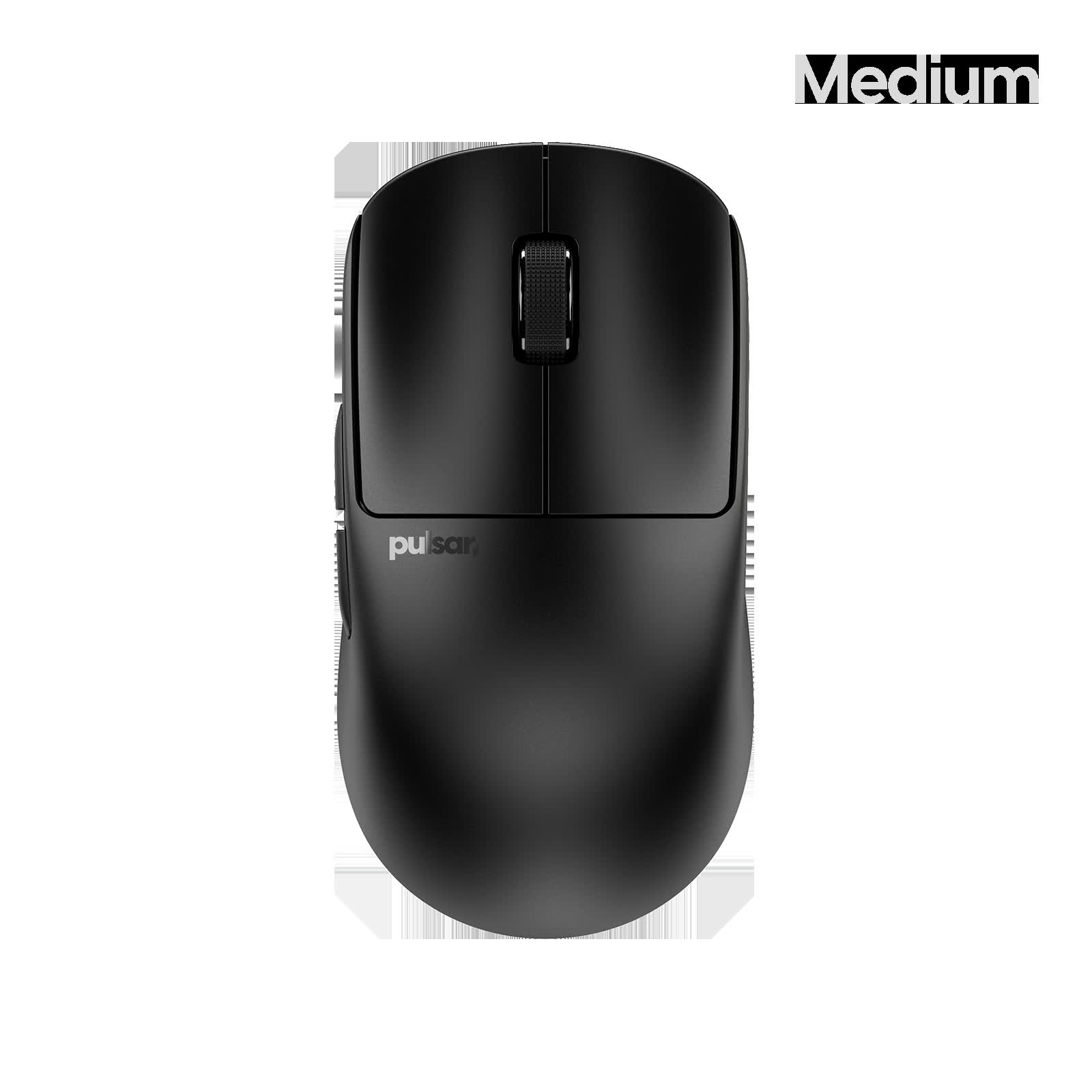
Pulsar has a new flagship mouse, and it is barely there. The X2 CrazyLight 2 launched on November 19 in Mini and Medium sizes, and it weighs 40 grams in Mini form with stock skates, or 38 grams with dot skates. The Medium is 43 grams with stock skates, or 41 with dots. That makes it one of the lightest wireless gaming mice you can buy, and the interesting part is what Pulsar changed underneath the shell rather than the weight itself.
The headline is a new sensor. The XS-2 replaces the XS-1 from the original X2 CrazyLight, and it is rated for up to 42,000 DPI, 800 inches per second tracking and 70G acceleration, with polling up to 8,000Hz over both the wireless dongle and the cable. Pulsar also swapped the scroll wheel encoder for a contactless optical design, which is the kind of change you only notice when it saves you from a scroll wheel that starts skipping a year later.
Pulsar X2 CrazyLight 2 specs
Both sizes share the same internals and the same low, wide, symmetrical shell, which is built for claw and fingertip grips. The Mini measures 115.6 by 61 by 36.6 millimeters, while the Medium is 120.4 by 63 by 38 millimeters. The shell design is unchanged from the original CrazyLight, so if you liked that shape, this is the same mouse in the hand with better parts inside.
The full spec list reads like a flagship checklist. The XS-2 sensor hits 42,000 DPI with single-count adjustment steps, 800 IPS tracking and 70G acceleration. Polling runs up to 8,000Hz wirelessly through the included Micro 8K dongle, and the same 8,000Hz is available over USB-C wired, which is not always the case with ultralight mice. The main buttons use Pulsar optical switches rated for 100 million clicks, so double-click issues should not appear. Lift-off distance has 11 levels of adjustment, and the mouse works on most surfaces without fuss.
The scroll wheel is the quiet upgrade. The new Pulsar TTC contactless optical encoder reads the wheel with an infrared beam instead of physical contacts, so there is nothing inside to wear down and start skipping or double-scrolling. Mechanical encoders develop those problems over time, and it is one of the most common reasons a good mouse starts feeling broken. This one should not have that failure mode.
What changed from the original X2 CrazyLight
The original X2 CrazyLight used Pulsar's XS-1 sensor, a custom implementation of the PixArt PAW3950, rated for 32,000 DPI, 750 IPS and 50G. The XS-2 pushes each of those numbers higher, but the honest truth is that the difference is mostly on paper. At the level of play where 42,000 DPI matters, your aim is the bottleneck, not the sensor. What matters more is that the XS-2 is Pulsar's own current sensor, which means firmware updates and support will focus here.
The weight story is more complicated than the headlines suggest. The original X2 CrazyLight Mini weighed 35 grams, which was lighter than the new Mini's 40 grams with stock skates. The new model is heavier, not lighter, because the new sensor, encoder and internals add mass. Pulsar traded a few grams for better parts, and that is the right call. A mouse that is 5 grams heavier but tracks reliably and has a scroll wheel that lasts is a better mouse.
What is missing
Two things are worth knowing before you buy. First, the dual-sensor technology Pulsar previously talked about developing is not in this mouse. The company discussed it publicly, but the X2 CrazyLight 2 ships with a single XS-2 sensor. If you were waiting for that feature, keep waiting.
Second, Pulsar has not published battery life figures, and the Mini was already tagged for backorder on the US store shortly after launch. Battery life at 8,000Hz polling is the real question for any ultralight mouse, since high polling rates drain small batteries fast. Until independent testing shows how long a charge lasts at 8K, treat the sensor numbers as Pulsar's claims rather than proven performance.
Who should buy the Pulsar X2 CrazyLight 2
The X2 CrazyLight 2 is for claw and fingertip grip players who want the lightest competitive mouse they can get without giving up 8,000Hz polling or a reliable scroll wheel. Palm grip players should look elsewhere: the low, wide shell is not built for them, and there are better-shaped mice at this price.
At $129.95 on Pulsar's US store, or 149.99 euros in Europe, it sits in the upper mid-range for gaming mice. That is the same price as the original CrazyLight, which is fair given the new sensor and encoder. If you already own the original and it still works, there is no urgent reason to upgrade. If you are buying your first ultralight mouse, or your current mouse has a skipping scroll wheel, this is one of the strongest options available right now. Read the full launch coverage at KitGuru and check the official listing on Pulsar's store. For a different take on the 8,000Hz trend, our ZOWIE EW Version coverage looks at six classic esports shapes with the same polling rate, and our Keychron Q19 HE review covers another 8K peripheral from the same season.