MSI MEG X Is a 34-Inch 360Hz QD-OLED Ultrawide With an AI Chip Inside
By AS Gaming EditorialNovember 21, 20266 min readPC
Source: MSI (official product images)
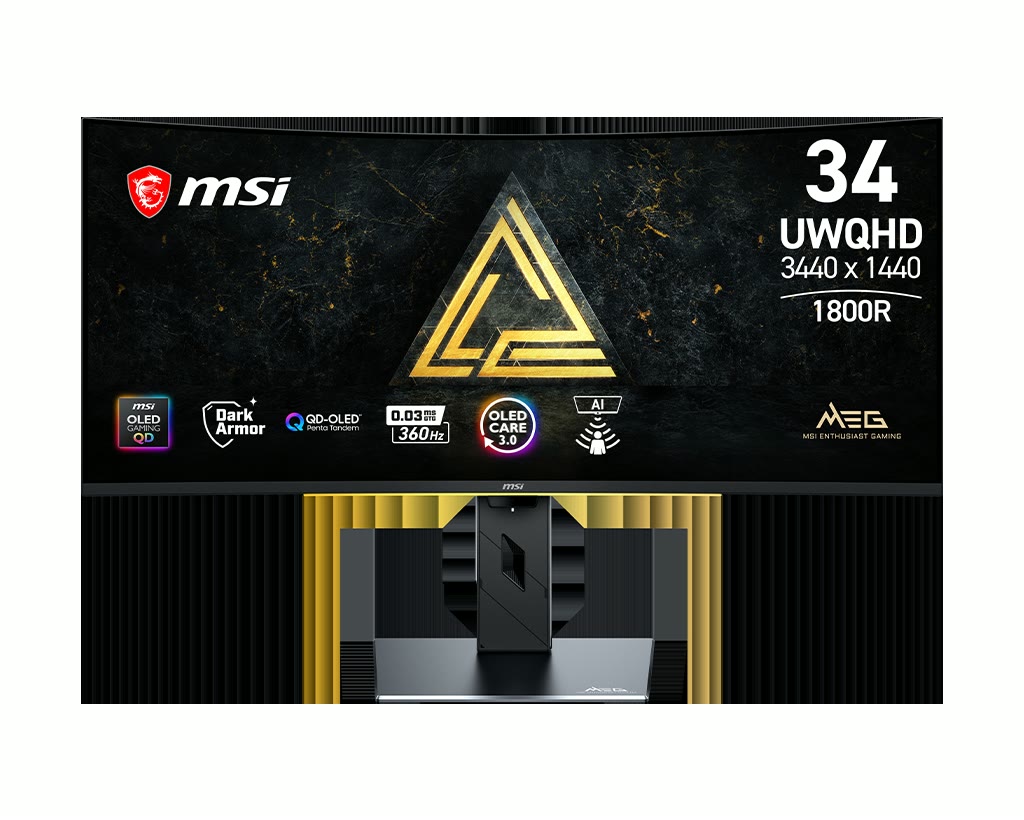
The MSI MEG X monitor is the most interesting screen MSI has built in years, and not only because of the panel. The 34-inch ultrawide pairs a 360Hz fifth-generation QD-OLED with an on-board AI processor, a light bar that mirrors your health bar, and a $1,299.99 price tag. MSI announced the full specification and pricing on November 10, 2026, after first showing the design at CES 2026, and the monitor is now in stock at the MSI US store. The question is whether the AI features are a real reason to buy it, or just expensive garnish on an already excellent panel.
MSI MEG X Monitor: The Panel Is the Real Story
Start with what matters most. The MEG X uses a 34-inch (33.98-inch viewable) QD-OLED panel at 3440x1440, in a 21:9 ultrawide format with an 1800R curve. It runs at a native 360Hz with a 0.03ms grey-to-grey response time, and it carries VESA ClearMR 18000 certification, which means motion stays sharp even during fast camera movement. Peak HDR brightness hits 1,300 nits across three HDR modes, with VESA DisplayHDR True Black 500 certification, and full-screen SDR brightness reaches 300 nits.
The panel itself is Samsung Display's fifth-generation QD-OLED, built on a five-layer Penta Tandem structure that MSI says improves light efficiency by up to 30 percent. The RGB Stripe subpixel layout is the quiet fix that matters most for daily use, because it reduces the color fringing and soft text that plagued earlier QD-OLED monitors. Color coverage is 99 percent DCI-P3, 97 percent Adobe RGB, and 136 percent sRGB, with Delta E under 2, so it is genuinely usable for color work as well as gaming.
DarkArmor Film is MSI's other panel upgrade. The film is claimed to deliver 40 percent deeper blacks and 2.5 times better scratch resistance than previous QD-OLED panels, while killing the purple tint that showed up on older QD-OLED screens under bright room lighting. If you play in a bright room, that last point alone might be worth more than any of the AI features.
The AI Chip: Clever, But Buy It for the Screen
The MEG X has a built-in AI processor that watches the image on screen and runs a set of tools without any PC software. AI Gauge detects in-game health or energy bars and mirrors their color on the SpectrumBar+ light bar along the bottom edge, so your desk lighting reflects your in-game state. AI Super Resolution upscales lower-resolution content, AI Vision+ adjusts the picture, AI Crosshair adds a crosshair overlay, and AI Scene and AI Audio Scene tune the visuals and sound to what is on screen.
Optix Scope+ is a built-in magnifier with square and circular styles, regular and night modes, and optional AI Super Resolution for clearer magnified detail. It is the kind of feature that sounds like a gimmick until you try it in a game with tiny UI text, and then it becomes hard to give up. The AI Care Sensor uses a CMOS sensor to detect whether you are sitting in front of the monitor, and it extends the mandatory panel refresh interval from 16 to 24 hours, so forced refresh interruptions happen less often.
MSI says the sensor processes visual information locally, and the data is not saved or transferred anywhere else. That is the right answer, and it is worth saying plainly, because a camera pointed at your desk is the kind of thing that deserves a clear privacy statement. On balance, the AI tools are genuinely useful in small doses, but none of them is the reason to spend $1,299. The panel, the refresh rate, and the connectivity are.
Connectivity, Build, and the Three-Year Warranty
The MEG X is properly equipped for a flagship. DisplayPort 2.1a with UHBR20 gives you the full 80Gbps of bandwidth, so 360Hz at full resolution runs uncompressed, and there are two HDMI 2.1 ports plus USB-C with DisplayPort alt mode and 98W power delivery, so a laptop can drive the screen and charge from one cable. A dual-port USB-A hub and a KVM switch round out the desk setup.
Build quality matches the price. The rear housing and stand use aluminium elements, with a metallic finish that echoes the MEG Maestro 900R case, and the stand offers 110mm of height adjustment, 30 degrees of swivel, 10 degrees of pivot, and tilt from minus 5 to 15 degrees. VESA 100x100 mounting is there if you want an arm instead.
The warranty is the part that should seal the decision for anyone worried about OLED burn-in. MSI covers the panel for three years, including burn-in, and the AI Care Sensor plus OLED Care 3.0 exist to make sure you never need to use it. The full specification is on the MSI US store page, where it is listed at $1,299.99, and Club386's launch coverage has a solid rundown of the announcement.
Who Should Buy the MSI MEG X
The MEG X makes sense for competitive players who want ultrawide immersion without giving up refresh rate, and for anyone who splits time between games and color-sensitive work. The 360Hz panel, the 0.03ms response, and the DisplayPort 2.1a connection put it ahead of the 240Hz ultrawides that dominated this segment last year, and the RGB Stripe layout finally makes QD-OLED text sharp enough for a full workday.
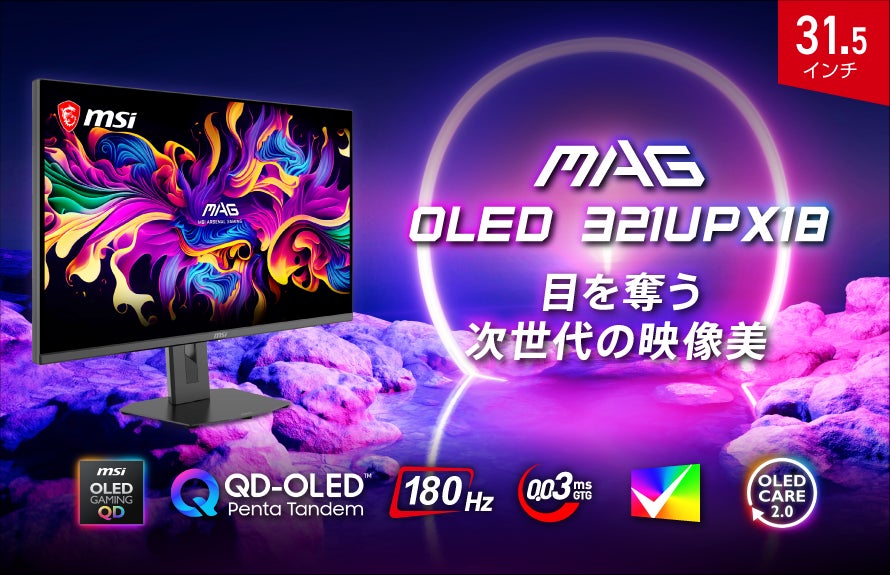
It does not make sense if you want 4K, because 3440x1440 is a step below that, and it does not make sense if you never touch the AI features and can live with a cheaper panel. Our MSI MAG 321UPX18 overview covers the 4K QD-OLED option at a similar price point, and the Philips Evnia 27M2D5901A shows what a dual-mode 5K screen looks like for less money. But if you want the fastest ultrawide MSI has ever made, with a warranty that actually covers the thing OLED buyers worry about, the MEG X is the one to beat this year.