Samsung Odyssey G6 G60H: The 1,100Hz Monitor With a 720p Catch
By AS Gaming EditorialNovember 25, 20264 min readPC
Source: Samsung (press kit, Samsung Global Newsroom)
Samsung Odyssey G6 G60H: the 1,100Hz monitor with a 720p catch
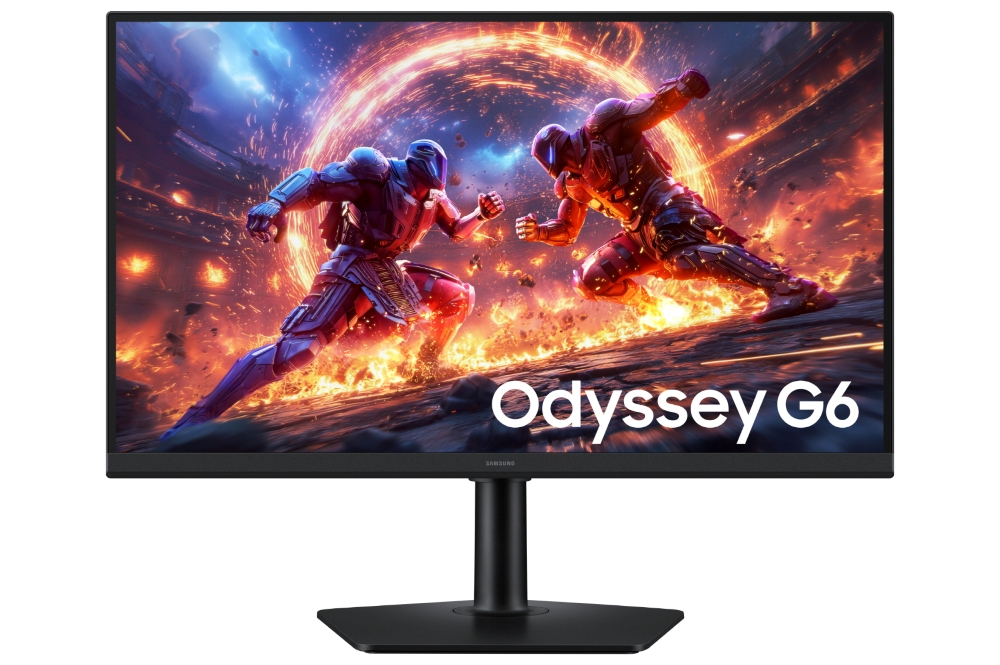
The Samsung Odyssey G6 (G60H) is the world's first gaming monitor to support a refresh rate of up to 1,100Hz, and the headline number deserves a closer look before you reach for your wallet. The 27-inch display was announced November 23, hits US retailers in December for $899.99, and uses a Dual Mode panel that trades resolution for speed. At its native QHD resolution, it runs at up to 600Hz. The 1,100Hz mode only exists at 720p. That trade is the whole story of this monitor.
This is not a prototype. Samsung teased the panel at CES 2026 with a 1,040Hz rating, then finalized it at 1,100Hz when showing its 2027 Odyssey lineup at Gamescom 2026 in August. Now it has a price, a shipping window, and pre-orders already live on Amazon at $893.11, slightly under the $899.99 MSRP. UK pricing lands at 769.99 pounds. For the full official announcement, see Samsung's newsroom release.
Samsung Odyssey G6 1100Hz mode: what the headline hides
The panel is a 27-inch flat Fast IPS display with a 2,560 x 1,440 native resolution, a 1ms grey-to-grey response time, 400 nits of typical brightness, a 1,000:1 contrast ratio, and 99 percent sRGB coverage. Dual Mode is the trick: run it at QHD and you get up to 600Hz, which is already absurdly fast. Drop to 1,280 x 720 and the panel unlocks the full 1,100Hz, refreshing the screen roughly every 0.91 milliseconds.
Samsung pairs that speed with Odyssey Clear Motion, a new blur-reduction algorithm the company plans to bring to more monitors. The G60H also supports HDR10+ Gaming, a Black Equalizer that lifts detail in dark scenes, NVIDIA G-Sync compatibility, and AMD FreeSync Premium. Connectivity is generous: one DisplayPort 2.1, two HDMI 2.1 ports, a USB hub, and a 3.5mm headphone jack. The stand adjusts for height, tilt, swivel, and pivot, and the panel takes a 100 x 100mm VESA mount.
The fine print matters. FreeSync Premium does not work in the 1,100Hz mode, and macOS does not support Dual Mode or the native 600Hz maximum at all. Samsung also notes that actual refresh rates depend on the game and the connected source. The 1,100Hz figure is a maximum panel capability, not a promise that your graphics card will render 1,100 frames per second in every title.
Who should actually buy it
For competitive players, the logic is real. In Counter-Strike 2 or Valorant, where motion clarity decides duels, 600Hz at QHD is already beyond what most rigs can feed, and 1,100Hz at 720p is a genuine edge for players who prioritize smoothness over sharpness. For everyone else, the math is less kind. This is an IPS panel, not OLED, so contrast and black levels will not match the best OLED gaming monitors, and $899.99 is steep for a 27-inch LCD when strong QD-OLED options like the MSI MEG X exist in the same price conversation.
Dual Mode itself is becoming a trend rather than a gimmick: Acer's new Nitro ultrawides switch between 5K2K at 180Hz and a lower resolution at 360Hz, and our Acer Nitro ED340CKR coverage explains the same trade from the other direction. Samsung has led the global gaming monitor market for seven straight years, from 2019 through 2025, and the G60H is a statement product that keeps it ahead on raw speed. Whether that speed is worth $900 depends entirely on how seriously you take your frame times. For most players, the 600Hz QHD mode is the real product, and it is already overkill. The 1,100Hz mode is a trophy spec for the few who will use it, and Samsung knows it.