ASUS XG Core RX 9060 XT Is a Pocket-Sized eGPU That Turns a Handheld Into a Desktop
By AS Gaming EditorialNovember 06, 20265 min readPC
Source: ASUS (official press image)
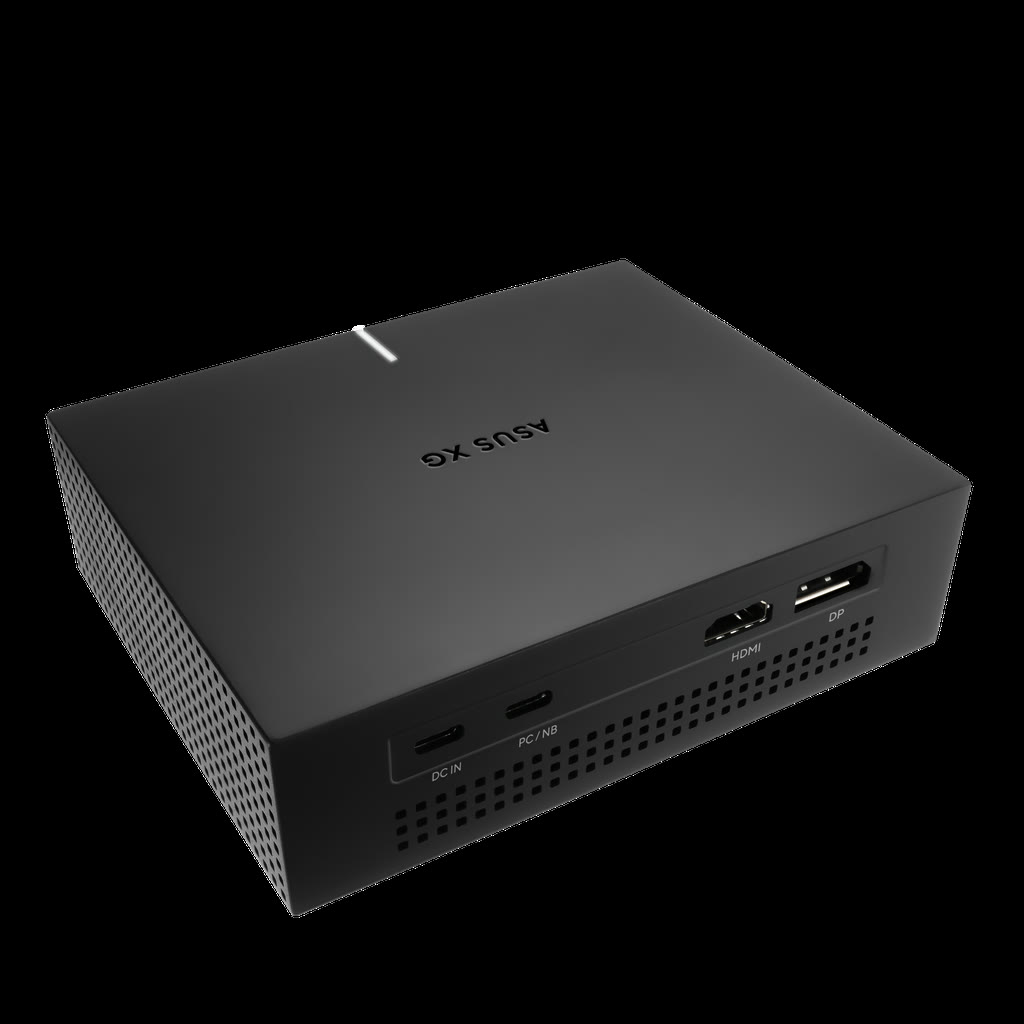
ASUS announced the ASUS XG Core RX 9060 XT on November 6, and it is the smallest serious external GPU the company has ever made. The XG Core packs a Radeon RX 9060 XT LP with 16GB of GDDR6 memory into a box measuring 144 x 117 x 39mm, and connects to a laptop, mini PC or gaming handheld over a single USB4 cable. No internal modifications, no opening the device, no full-size enclosure on the desk.
It is a different idea from the eGPU docks that came before it. Instead of an empty enclosure you fill with a desktop card, the XG Core is a complete, self-contained unit: GPU, cooling and outputs in one brick you can drop in a bag. For handheld owners who want desktop-class graphics at home and portability on the road, that is a tempting combination.
Connection: USB4 up to 40Gbps, plus Thunderbolt 3 support
Size: 144 x 117 x 39mm
Outputs: HDMI and DisplayPort
Software: ASUS GPU Tweak III for clocks, memory, voltage and fan control
Compatible hosts: laptops, mini PCs and gaming handhelds, including ROG Ally X and ROG Xbox Ally X
The 16GB of VRAM is the headline number. It is enough for modern games at high settings and for the creative and AI workloads ASUS is pitching alongside gaming: local image generation and large language model inference in tools like ComfyUI, LM Studio and Ollama. Performance depends on the workload and the host, and USB4's 40Gbps ceiling means the card will not match the same GPU in a desktop PCIe slot, but for a handheld or a thin laptop it is a large step up from integrated graphics.
Who the XG Core is actually for
The obvious audience is handheld owners. A ROG Ally X or ROG Xbox Ally X is a capable portable machine, but it leans on an integrated GPU. Dock it to the XG Core at home and you get a discrete RDNA 4 card driving a desktop monitor through HDMI or DisplayPort, then unplug and take the handheld with you. The same logic applies to thin-and-light laptops and mini PCs that were never designed to take a graphics card.
Creators are the second audience. Video editing, 3D rendering and local AI work all benefit from a real GPU, and a portable unit means the same card can serve a laptop at home, a mini PC in the office, and a handheld on the move. GPU Tweak III covers the tuning side: core clocks, memory frequency, voltage and fan curves, with real-time monitoring and an on-screen display.
XG Core vs XG Station 3: which eGPU fits your desk
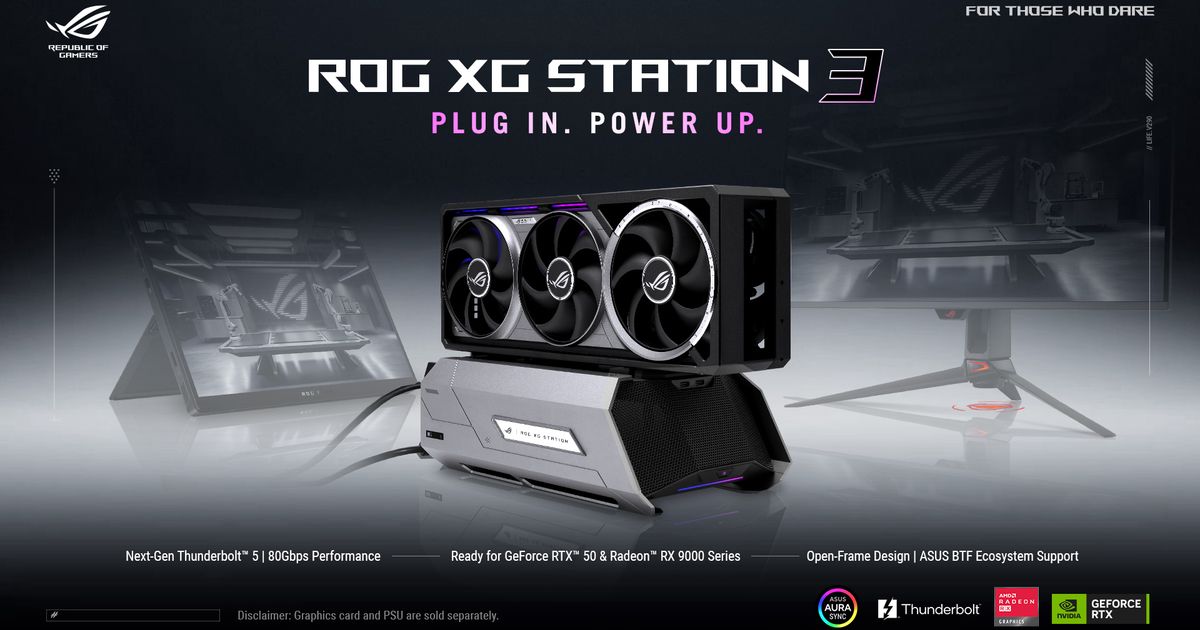
ASUS now sells two very different external graphics ideas, and the choice depends on what you already own. The ROG XG Station 3 is an open-air dock: you supply your own desktop GPU, anything from an RTX 50 series to an RX 9000 series card, and it connects over Thunderbolt 5 at up to 80Gbps with 140W power delivery. It is bigger, more expensive once you add a card, and more powerful.
The XG Core is the opposite bet. It is smaller, self-contained, and capped at USB4 speeds, but it works out of the box with nothing extra to buy. If you already own a high-end desktop GPU, the Station 3 makes more sense. If you want a single portable unit that turns a handheld into a desktop, the XG Core is the cleaner buy.
There is also the question of timing. Handhelds keep getting better, and the ROG Xbox Ally X20 launched with an OLED display and TMR sticks, showing how fast the portable side is moving. An eGPU like the XG Core extends the life of the handheld you already own instead of asking you to buy a new one.
What ASUS has not said yet
Price and availability are still unannounced. ASUS has not given a launch date, a price, or regional availability for the XG Core, and the announcement does not include benchmark figures. That is normal for a press-release launch, but it means the value question is unanswered: a portable RX 9060 XT is only a good buy if the price lands well below a desktop card plus enclosure.
Watch for the price first, then for real-world tests on handheld hosts. The concept is sound, the size is genuinely impressive, and 16GB of VRAM future-proofs it better than most portable graphics. Whether it is worth buying will come down to the number on the box.