Microsoft's next handheld may be far more powerful than anyone expected. Reports this week say the Xbox Helix handheld, the portable member of Microsoft's next-generation Helix family of devices, will run a custom AMD chip with 24 compute units of RDNA 5 graphics. That would give it half again as many graphics compute units as Sony's competing portable, and it would put a genuine console-class chip inside a handheld for the first time.
The details come from hardware insider The Phawx, speaking on the Nerd Nest podcast and reported by GameGPU on November 4, with a second report from industry insider eXtas1s following on November 5. Both point to the same picture: Microsoft funded a custom version of AMD's Medusa Halo chip for the device, built around energy-efficient Zen 6c processor cores and a next-generation RDNA 5 graphics block.
Xbox Helix Handheld: What the Reports Say
The headline number is 24 compute units. According to the reports, the Xbox Helix handheld pairs those 24 RDNA 5 compute units with Zen 6c cores, running inside a power envelope of roughly 20 to 35 watts. That power range is the key detail: it is handheld territory, not desktop territory, which means the chip is designed to sip power on the go and stretch its legs when docked.
Docked play is reportedly part of the design. Like the Switch, the Helix handheld is said to run at lower power in handheld mode and unlock extra performance when connected to a dock. That dual-mode approach would let Microsoft sell one device that behaves like a portable on the train and a home console on the TV.
The reports also say Microsoft paid for the custom silicon itself rather than taking an off-the-shelf AMD part. That matters because it signals intent: a company does not fund a custom chip for a device it is unsure about. The custom route also explains why third-party handheld makers are expected to get something different, namely standard AMD Ryzen Z3 processors combining Zen 6 cores with a scaled-down RDNA 4m graphics block.
24 Compute Units vs 16: The Sony Comparison
The comparison doing the rounds is with Sony's rumored PSP 3 handheld, which the same reports credit with 16 RDNA 5 compute units. If both numbers hold, the Xbox Helix handheld would carry exactly 50 percent more graphics compute units than its Sony rival, a gap that would show up in resolution, frame rates, and ray tracing performance at the higher end of the power range.
That gap needs context. Compute units are not the whole story: clock speeds, memory bandwidth, cooling, and software all shape real performance. A handheld running at 20 watts will not behave like the same silicon running at 35 watts, and both companies can still change the final configuration. But as a statement of ambition, 24 units says Microsoft wants its handheld to win the spec sheet, not just compete on it.
There is also a wrinkle. Hardware insider KeplerL2 pushed back on parts of the story, saying the chip described for a cheaper Helix S model matches the already-known AT4 die rather than a brand-new custom part. That does not contradict the 24 compute unit claim for the main handheld, but it is a reminder that the Helix family has several members and not every rumor describes the same one.
What Is Confirmed, What Is Rumor
Here is the honest split. Confirmed: Microsoft is building a next-generation Xbox family codenamed Helix, it plays Xbox console games and PC games on a custom AMD chip, and alpha hardware is heading to developers in 2027. Xbox chief executive Asha Sharma has called Helix a family of devices, and Xbox CTO Scott Van Vliet has said Helix OS is being built on Windows.
Reported, not confirmed: a handheld for the 2027 holiday season, a home console in 2028, the Medusa chip, the 24 compute units, and the price. Fortune reported in October that the home console was internally projected at $1,200 to $1,800 unless Microsoft subsidizes it, which would make it the most expensive Xbox ever by a wide margin. Treat all of that as reporting until Microsoft says it itself.
Why a Dock Matters
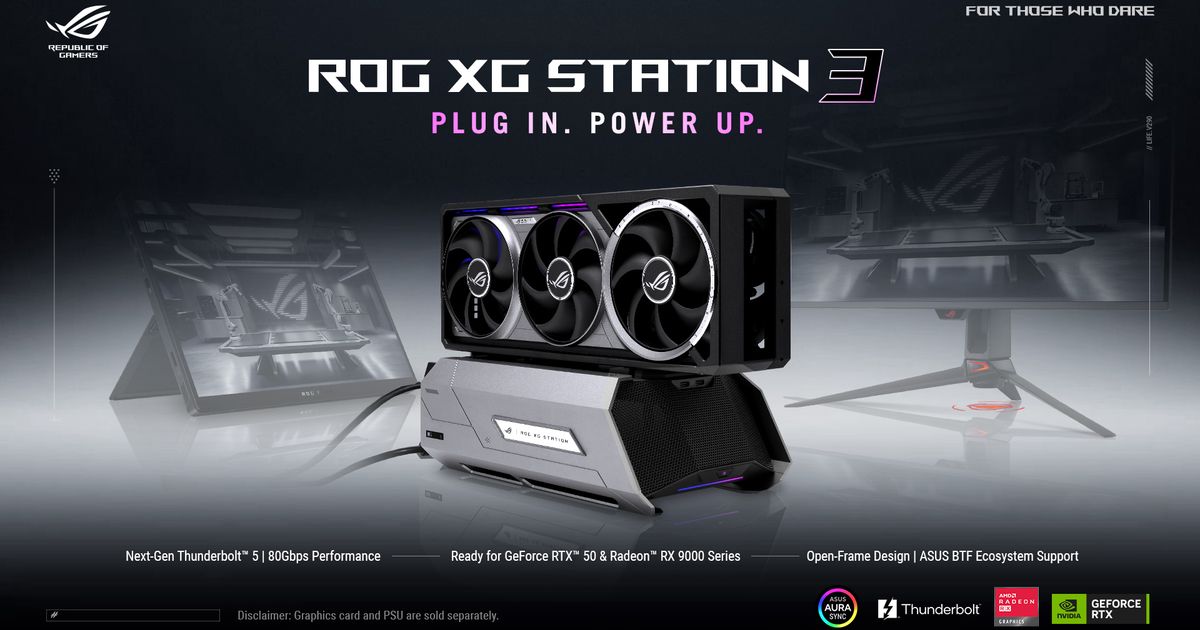
The most interesting part of the Helix handheld story is not the chip, it is the shape of the device. A handheld that docks is a direct answer to the Switch, and it is a very different product from the ROG Xbox Ally X20, the $1,299 Windows handheld that plays PC games but not Xbox console games. The Helix handheld, if the reports are right, would play both, which is the whole point of the Helix project.
That is also why the chip matters. Running Xbox console games natively on a handheld needs real graphics hardware, not a streaming workaround. A custom Medusa chip with 24 RDNA 5 compute units is Microsoft's attempt to solve that problem properly, and if it works, it changes what a handheld can be. Read the original reports at GamingBible and GameGPU. For the current state of handhelds, see our best gaming handhelds roundup.