Source: Atari / Pipeworks Studios (official art via Steam)
7.5
7.5/10 · Good
Strengths
Faithful to the 2002 original in the ways that matter
Four-player monster brawls are still gloriously chaotic
Clean visual upgrade and smooth performance make this the definitive version
Weaknesses
Combat depth is thin compared with modern fighting games
Single-player campaign turns repetitive well before it ends
Thin mode list with little to chase once every arena is seen
How we score: this verdict is our editorial take, based on launch coverage, critical reception and community feedback.
Some remasters exist to modernize a classic. Godzilla: Destroy All Monsters Melee Remastered exists to remind you why the original was fun in the first place, and it mostly pulls that off. Atari and Pipeworks Studios brought the 2002 GameCube and Xbox arena brawler back on November 3 for PlayStation 5, Xbox Series X|S, and PC, with a Nintendo Switch 2 version following on November 5. It costs $29.99, it looks cleaner than it has any right to, and it understands its assignment: let four giant monsters wreck a city while your friends shout at each other.
The critical reception has landed in the same place. The game sits around 72 to 75 on Metacritic depending on platform, with IGN and GameSpot both awarding 7 out of 10. That is a fair summary of what is here: a solid, good-natured throwback that does one thing well and does not pretend to be anything else.
Godzilla Remastered Review: The Verdict in Brief
This is a faithful remaster, not a reimagining. The roster, the arenas, the destruction, and the gloriously daft tone are all intact from 2002, wrapped in sharper visuals and smoother performance. If you played the original, the first ten minutes will feel like finding an old toy in working order. If you did not, you get a brawler that is easy to learn, funny to watch, and honest about its limits.
Our score is 7.5 out of 10. The game earns it on charm, chaos, and respect for the source material, and it loses points for combat that runs out of ideas quickly and a single-player offering that feels thin next to what modern fighting games provide.
What Still Works: Four Monsters, One City
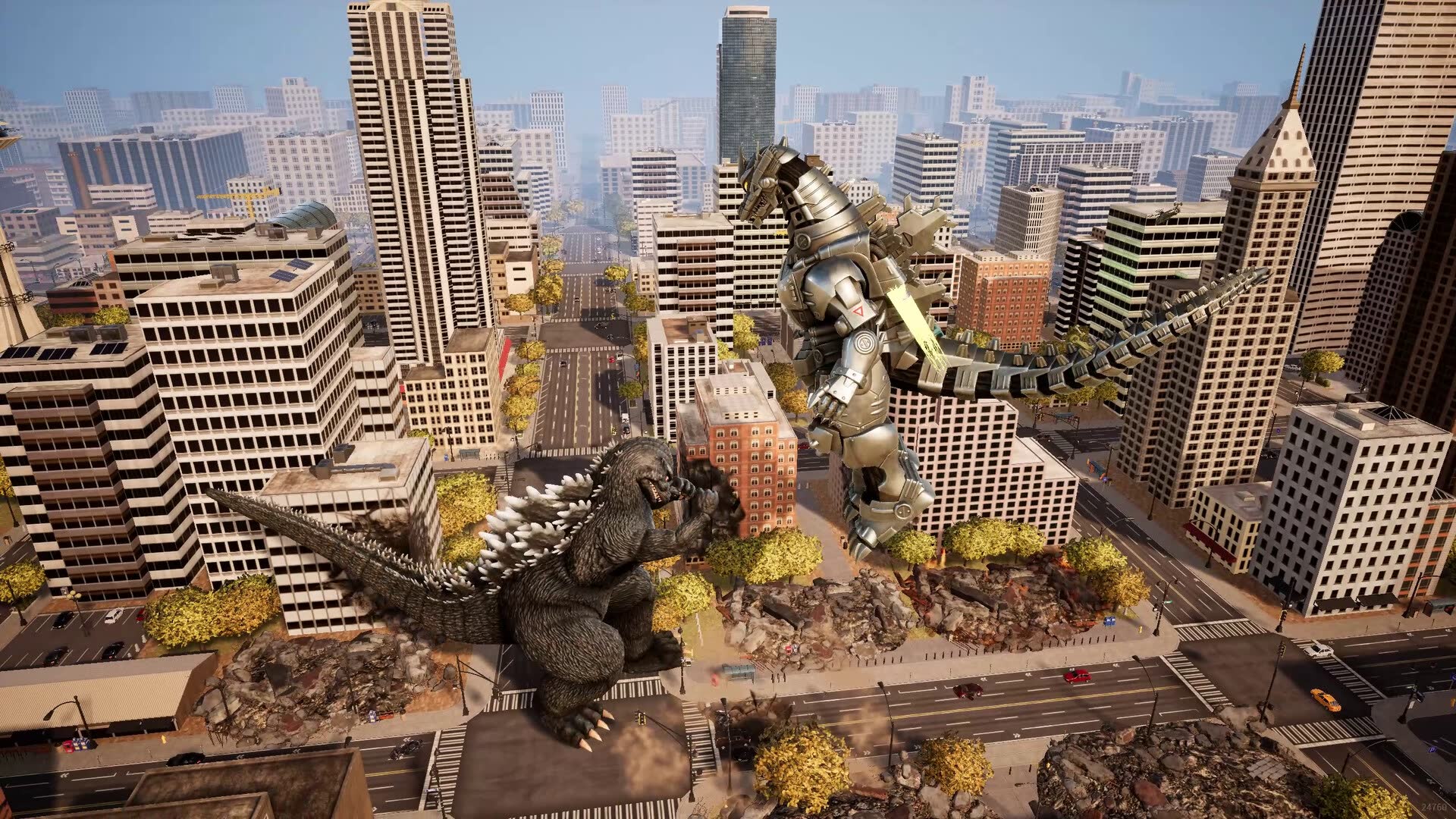
The core loop has aged better than it should have. Pick a monster, drop into a city, and throw buildings, other monsters, and the occasional military unit at each other until someone falls over. The destruction is the star: skyscrapers crumple, bridges snap, and the whole arena feels like a toy box someone tipped over. Pipeworks kept that intact and cleaned up the presentation, so the action reads clearly even when four monsters are brawling at once.
Multiplayer is where the game justifies its existence. Local and online four-player matches turn the shallow combat into a strength, because nobody is studying frame data in a Godzilla game. They are picking Mothra, spamming the beam, and laughing when a building lands on them. The remaster keeps that social, party-game energy front and center, and it is the main reason to buy it.
The visual upgrade is real without being revisionist. Textures are sharper, the lighting is cleaner, and the game runs smoothly on modern hardware. It still looks like a game from 2002 at heart, and that is the point. Pipeworks resisted the urge to rebuild something that did not need rebuilding.
What Shows Its Age
Combat depth is the obvious ceiling. Modern fighting games offer systems to master for hundreds of hours; this one offers a handful of attacks, a block, and a special meter. That is enough for a fun evening and not enough for a long-term obsession. Players who want a competitive fighter will bounce off within a week.
The single-player campaign is the weakest part of the package. Missions follow a familiar pattern of fight, destroy, move on, and the structure repeats itself long before the campaign ends. It works as a way to learn the roster, but it is not a reason to buy the game on its own.
The mode list is also thin by 2026 standards. There is no meaningful progression system beyond unlocking monsters, and little to chase once you have seen every arena. The game is a party brawler wearing a remaster's clothes, and it never tries to be more than that.
Who Should Buy It
Buy this if you have people to play it with, or if you have fond memories of the original and $29.99 to spend on nostalgia that actually holds up. Skip it if you play mostly alone and want a fighting game with depth, or if you never cared for arena brawlers in the first place.
Godzilla: Destroy All Monsters Melee Remastered is a good remaster of a fun, limited game. It knows what it is, it does it well, and it gets out of the way. For a certain kind of player, that is exactly enough. Check the official store page on Steam and the review roundup at GameSpark for the full critical picture. Fans of other recent throwbacks should also read our Phantom Blade Zero review and The Wolf Among Us Remastered review.