Evil Geniuses Is Shutting Down: the End of a 27-Year Esports Legacy
By AS Gaming EditorialOctober 23, 20264 min readPC
Source: opterown, CC BY-SA 4.0 (via Wikimedia Commons)
Evil Geniuses shutting down is the kind of headline that stops you mid-scroll. On October 20, CEO Chris DeAppolonio announced (full statement via Dot Esports) that the organization will cease competitive and day-to-day operations on November 2, 2026, ending a run of more than 25 years that took EG from a Canadian Quake clan to world titles in Dota 2 and VALORANT. Players across every roster are free to talk to other organizations starting now.
The statement is blunt about the reasons. Despite years of rebuilding, stabilizing operations, and growing the creator roster, EG concluded the business could not be run responsibly in the current environment: sponsorship money is limited, and the cost of competing at the top keeps rising. It is the same sentence, with different logos, that has now ended several legacy organizations.
Evil Geniuses shutting down: what happens next
EG says it will wind down in an orderly way and work with every affected player, coach, and staff member through the transition. Every player on every roster can speak with other organizations immediately. The VALORANT players and coaches become eligible to sign with new teams on November 2, the day the doors close and the 2026 season ends.
DeAppolonio also made a personal plea to anyone hiring: he invited teams and companies with openings to contact him directly, promising to personally vouch for every player, creator, and staff member who worked at EG. It is a classy move from an organization that, for all its later chaos, clearly still cared about its people.
A legacy that genuinely mattered
EG started in the late 1990s as a Quake clan playing out of a cyber cafe in Victoria, British Columbia. Alex Garfield professionalized it in 2004, and Chicago investment firm PEAK6 bought it outright in 2019. Across nearly three decades, the org fielded teams in StarCraft, Counter-Strike, Call of Duty, League of Legends, Dota 2, and VALORANT.
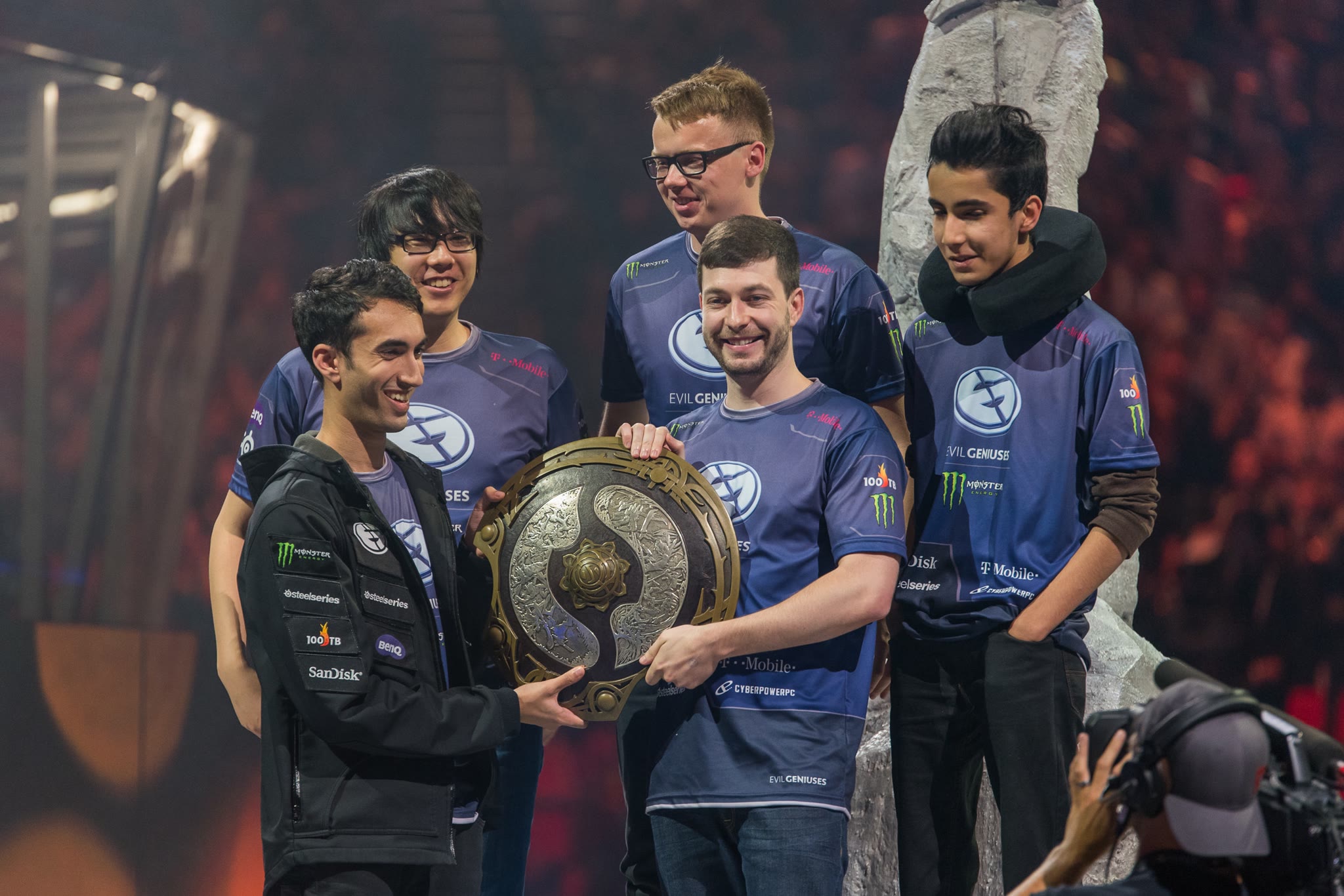
The peaks were real peaks. In August 2015, at KeyArena in Seattle, EG's Dota 2 roster of Fear, ppd, UNiVeRsE, Aui_2000, and a 16-year-old SumaiL beat China's CDEC Gaming 3-1 to win The International, taking home $6.6 million and becoming the first North American team to lift the Aegis of Champions. Eight years later, the VALORANT roster completed its own miracle run: after a 1-4 start to the season, EG moved Demon1 into the lineup, finished second at Masters Tokyo, and then won VALORANT Champions 2023, again the first NA team to do it. Add a Call of Duty world championship in 2018, ESL One New York 2019 in Counter-Strike, and the 2022 LCS Spring title, and the trophy case is undeniable.
The hard years
The title runs did not last. EG moved its Dota 2 operation to South America in late 2022 and released the roster a year later. It left the LCS in November 2023 and exited Counter-Strike in January 2024. Most of the VALORANT championship roster departed after being offered pay cuts. By this year, the competitive footprint had shrunk to VALORANT, Pokemon UNITE, and 2XKO.
The final blow was likely structural. Riot is cutting VCT partner slots from ten to eight per region for 2027, and EG was not among the organizations selected, a fate it shared with NAVI. Losing partner status in the middle of a sponsorship drought is the kind of thing that turns a slow decline into a shutdown notice.
What it means for esports
Every time a legacy org falls, the same debate restarts: is the partner-league model sustainable, or does it just concentrate risk? EG's closure, coming right after Global Esports exited VALORANT and in the same month that LOUD won Champions Shanghai, paints a stark picture of an industry where the trophies keep getting bigger and the business keeps getting harder.
For the players, at least, the timing could be worse: the post-season shuffle is exactly when rosters are being built, and EG's free agents will not lack for suitors. GG, Evil Geniuses. Thanks for the memories.