Source: Telltale Games (official Steam screenshots)
8.5
8.5/10 · Great
Strengths
A gripping noir story where choices still carry real weight across all five episodes
The comic book art style has aged beautifully and the visual cleanup is tasteful
Genuinely good extras, including Noir Mode, deleted scenes, and developer interviews
Weaknesses
Stiff, occasionally uncanny character animations that look more dated in 2026
No new story content, so returning players get a polish rather than a new reason to replay
Episode four pacing dip and old fashioned quick time events still drag at times
How we score: this verdict is our editorial take, based on launch coverage, critical reception and community feedback.
Wolf Among Us Remastered Review: The Verdict
The Wolf Among Us Remastered is the easiest recommendation in Telltale's catalog and a slightly awkward one at the same time, which is why this Wolf Among Us Remastered review lands on 8.5. The 2013 noir adventure, based on Bill Willingham's Fables comics, returns on October 29 with all five episodes in one package, cleaned up visuals, a new Noir Mode, deleted scenes, and developer interviews. The story is still superb. The presentation is better. And yet nothing here changes the game itself, so newcomers get the definitive version while returning players get a very good excuse to revisit Fabletown, not a new game.
For the uninitiated, the setup remains one of the best in narrative games. Bigby Wolf, the Big Bad Wolf reformed (sort of) into the sheriff of Fabletown, investigates a murder in a community of fairy tale characters hiding in 1980s New York. Snow White, Beauty and the Beast, the Woodsman, and a cast of exiled legends all have secrets, debts, and reasons to lie to you. Choices matter here in ways that go beyond a dialogue meter: who you trust, who you threaten, and who you let walk away all shape later episodes, and the game is not shy about making you live with a bad call. Thirteen years on, that structure still holds up, because the writing treats its characters as people with messy motives rather than quest givers with punchlines.
Wolf Among Us Remastered: What the Remaster Changes
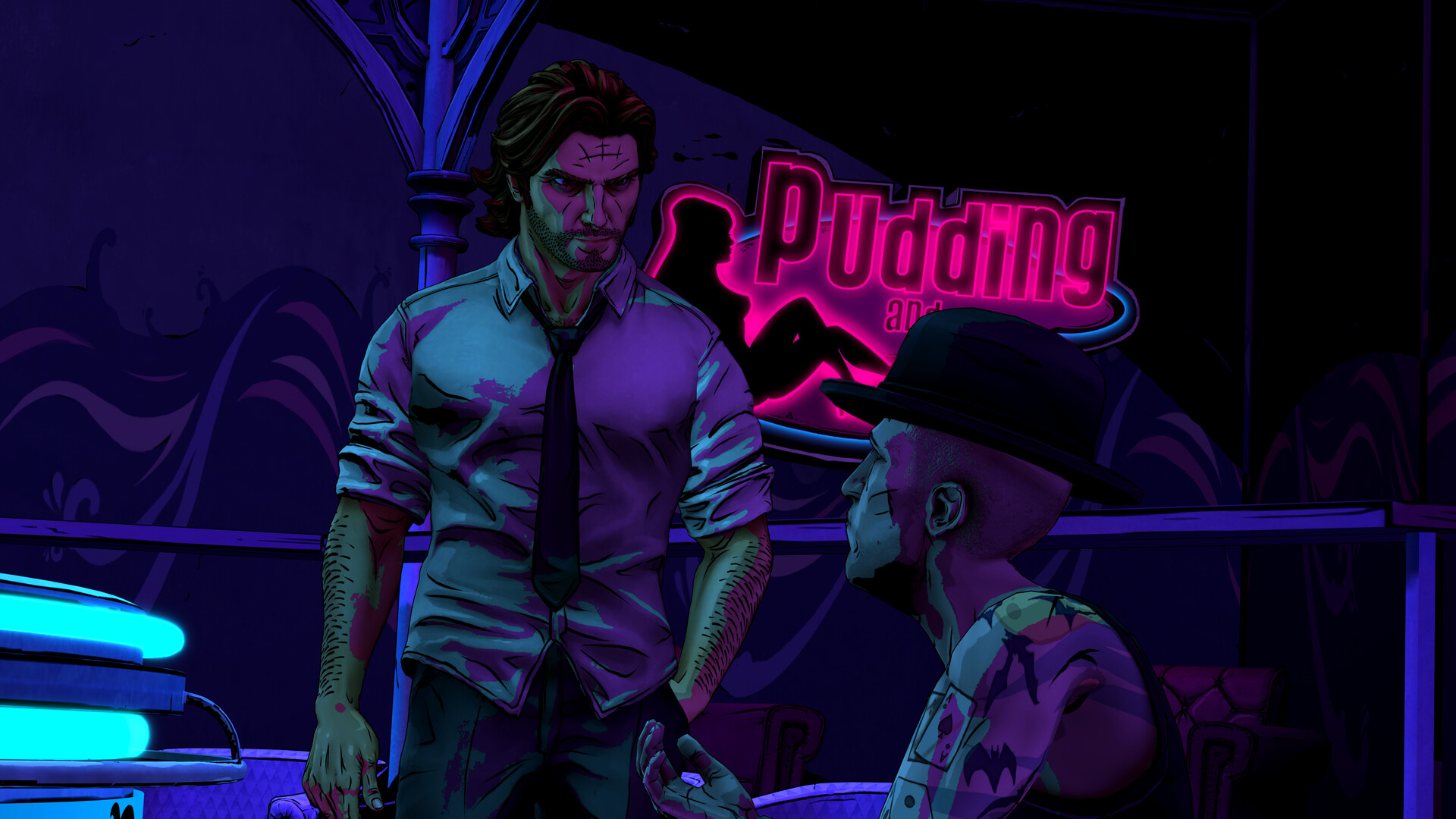
The remaster's work is mostly visual, and it is tasteful rather than transformative. Lighting and set dressing have been enhanced, environments carry more detail, and the comic book art style, bold outlines, painted textures, and moody color, looks excellent on modern displays. Performance problems that plagued the original, including frame rate hitches and lag, have largely been ironed out. The result is a game that looks like the version you remember from 2013, which is the highest compliment a remaster of a stylized game can earn: it preserves the art direction instead of sanding it down into something generic.
The extras are the real draw for returning fans. Noir Mode renders the whole game in black and white, which suits the rain soaked streets of Fabletown even if it can make timed dialogue prompts harder to read. Playable deleted scenes are the standout addition, offering a look at material cut from the original episodes, and the developer interviews give useful context on how Telltale built its most confident narrative game. None of this changes the story, but it does make the package feel like a proper archival edition rather than a quick resolution bump. As brief context, the critical consensus sits in the mid 80s on Metacritic with every critic recommending it on OpenCritic, which matches our own assessment: widely liked, rarely called perfect.
Wolf Among Us Remastered: Where It Shows Its Age
The problems are all inherited, and they are more visible now because everything around them got cleaner. Character animation remains stiff and occasionally uncanny, with walk cycles and facial expressions that belonged to an older engine even in 2013. Telltale's engine, refreshed but still recognizably old, cannot hide that, and in close up conversation scenes the effect can pull you out of an otherwise gripping exchange. Quick time events feel archaic too: they were a standard part of the genre a decade ago, but in 2026 they read as interruptions rather than tension, especially in action sequences where the story is doing the heavy lifting anyway.
Episode four is the other weak spot. Its pacing dips as the plot recaps information the player already knows, and the slowdown lands harder in a binge playthrough of all five episodes back to back than it did in the original episodic release schedule. None of this ruins the game. The story recovers, the finale lands, and the overall arc from the first murder to the last confrontation remains one of the strongest in the genre. But it does mean the remaster cannot honestly be called definitive: a definitive edition would have smoothed at least some of these edges, and this one leaves them in place, warts and all.
Who Should Buy Wolf Among Us Remastered
If you have never played The Wolf Among Us, buy this version without hesitation. It is the best way to experience a classic, it includes everything in one purchase, and the sequel is targeting 2027, so there has never been a better time to catch up on Fabletown. If you own the original, the calculation is tighter: the visual cleanup and extras are genuinely nice, but they do not add story content, and the $19.99 launch price (after discount) is fair for a revisit rather than a must buy upgrade. Either way, the game itself remains essential. Bigby Wolf is still one of gaming's great protagonists, a monster trying to be a decent sheriff in a town full of monsters pretending to be decent, and that contradiction powers every episode. Our score of 8.5 reflects exactly that split: a brilliant story and a smart package, held back by animation and pacing problems that a remaster chose to preserve rather than fix. If you want another recent narrative recommendation, our Mouthwashing console guide covers a very different kind of horror story, and our Phantom Blade Zero review shows what a brand new action game looks like at the same score.